GCD & LCM: Tag Each Word Problem GCF or LCM, Then Solve
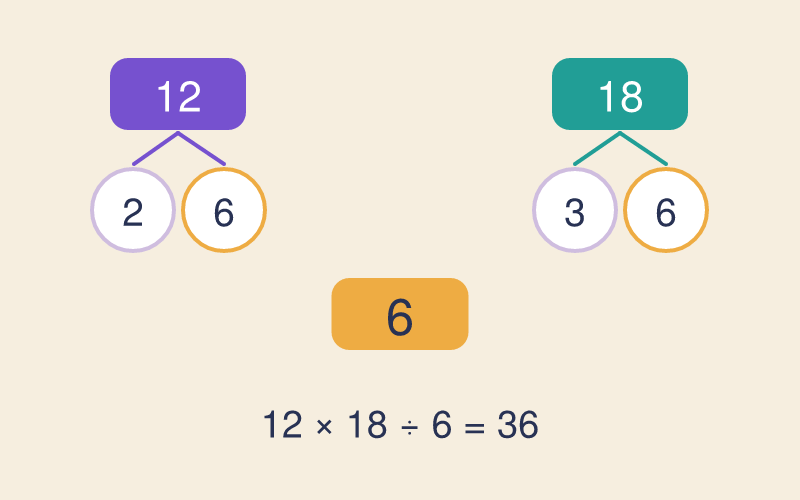
Read a rope-cutting, tiling, or bus-timing prompt, then use the factor list and the multiple track to pick the right tool. Every round trains you to classify the situation before you compute.
How to Decide GCF or LCM Before You List a Single Factor or Multiple
Plenty of upper-elementary kids can list factors and roll out multiples on demand—the wall comes when a word problem hides which one it wants. A bus-syncing prompt and a rope-splitting prompt look almost identical until you ask whether things must line up again or split evenly, so each round rewards casework over reflex. This game forces the decision first: you tap a GCF-LCM label before the factor list or multiple track will help you. Cutting rope and syncing buses become visual anchors, so "greatest common" and "least common" stop being interchangeable words. The classify-then-compute order is the habit that survives past the game.
Tiling and Bus Timing Push Grade 4 Factors Into Grade 6 Number Theory
Grade 4 work on factors and multiples (4.OA.B.4) becomes applied reasoning here under CCSS 6.NS.B.4. Picking GCF for equal grouping and LCM for repeat alignment opens the door to coprime thinking, prime factorization, and the systematic counting that later fraction and ratio problems lean on.
Three Number-Theory Skills Practiced in Each Round
- List common factors and choose the greatest one.
- Track multiples until two cycles meet for the first time.
- Classify applications such as equal cuts, tiling, syncing, and reverse-product problems.
Three Moves to Solve: Classify, List, Choose
- Read the problem and decide whether it is grouping or repeating.
- For GCF, inspect the factor list and pick the greatest common factor.
- For LCM, walk the multiple track and find the first shared multiple.
- Return to the context and check the unit: metres, centimetres, minutes, or a number.
Five-Minute Teacher Routine: Label Before Calculating
Have students say whether a problem is about splitting into equal groups or finding when things match up again before they calculate. That classification step is the real skill.
GCD and LCM Questions Teachers Hear
Q: Why do students swap GCF and LCM?
A: They often calculate before classifying. Equal grouping, cutting, and tiling usually use GCF; repeated events and syncing usually use LCM.
Q: Is a shortcut method enough?
A: No. Shortcuts find an answer, but word problems require explaining why that answer fits the situation.