Excess and Shortage: Compare Two Plans to Uncover the Hidden Count
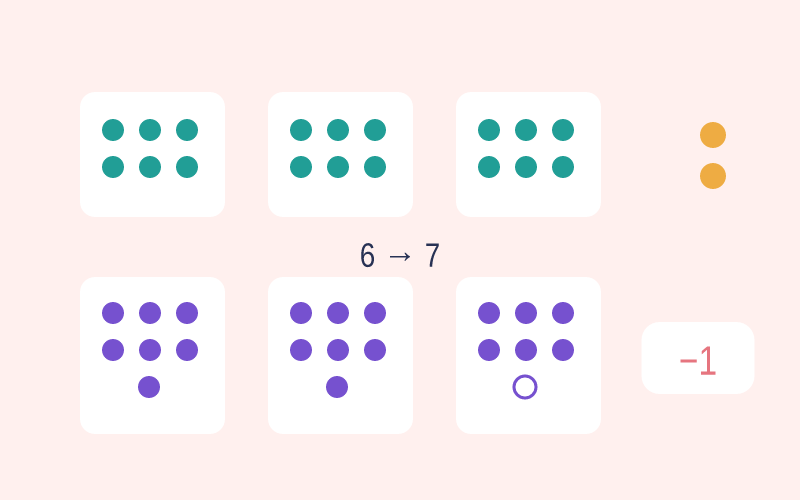
Toggle between Plan A and Plan B, read what is left over or missing, and turn the gap between the two plans into the number of people. It trains you to see excess and shortage as one connected quantity, not two separate facts.
Leftover and Shortfall Are Two Ends of One Gap, Not Two Separate Numbers
Most students solve Plan A and Plan B in isolation, reading "3 left over" and "5 short" as unrelated results and then freezing when neither one hands them the count. The real stall point is realizing that the leftover and the shortfall are opposite ends of a single total gap. As you switch plans in the game, the per-share change and the running excess or shortage stay on screen, so you can watch the combined difference grow. Dividing that gap by the extra items each person receives is what finally exposes the number of people. The visible plan toggle turns an abstract "assume, then adjust" argument into something you can literally see move.
From Remainder Division to Solving for the Unknown (Grades 5-6)
This challenge builds on whole-number division and the interpretation of remainders (5.NBT.B.6) and pushes learners toward writing and solving one-variable equations (6.EE.B.7). By comparing two distribution plans, students rehearse the substitution logic behind assumption problems like chickens-and-rabbits and the bar-model setups common in upper-elementary contest math. It is a deliberate bridge from arithmetic to structured equation thinking.
Three Distribution Skills Practiced While Comparing Plans
- Identify excess and shortage values in each plan.
- Compare the per-share change between Plan A and Plan B.
- Infer the number of people from total difference divided by per-share difference, then recover the total.
Three Moves to Solve: Read Plans, Compare Difference, Choose People
- Read Plan A and Plan B, including items per person and excess or shortage.
- Find how many more items each person receives in one plan.
- Combine or subtract the excess and shortage values to get the total difference.
- Divide total difference by per-share difference, then choose the number of people.
Five-Minute Teacher Routine: Ask the Per-Share Difference First
Before using a formula, ask how many more each person receives in Plan B than Plan A. Once that unit difference is clear, the hidden count makes sense.
Excess and Shortage Questions Teachers Hear
Q: Why add excess and shortage in one-surplus-one-deficit problems?
A: The change crosses from leftover to not enough, so the total gap includes both the leftover amount and the shortage amount.
Q: Why subtract in double-surplus or double-deficit problems?
A: Both plans are on the same side, so only the change between the two excesses or two shortages matters.