Planet Landing: Add the Two-Digit Base and Land on the Matching Sum
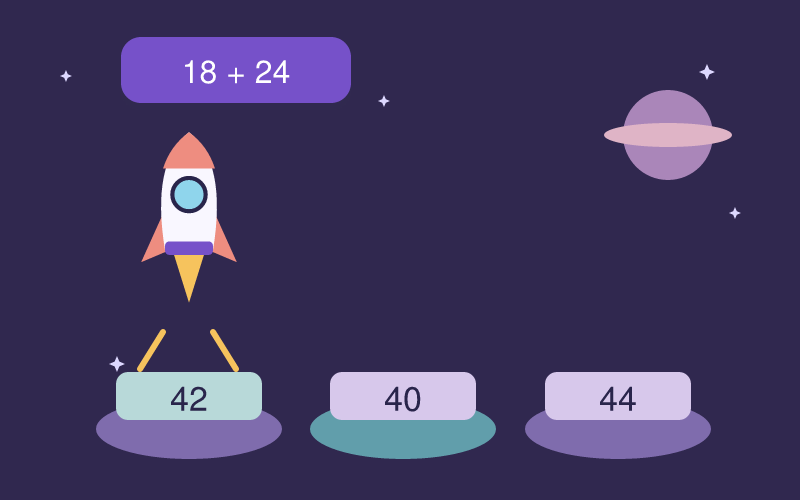
Steer your descending ship down the landing track and touch down on the planet showing the correct sum. Each round trains quick two-digit addition plus the discipline to pick the right total out of several near-identical options.
The Sum Won't Wait: A Falling Ship Turns Every Near-Miss Planet Into a Trap
Most third graders can add 38 + 34, but the trouble starts when 72 sits one planet away from 76 and the ship is already falling. Students who glance instead of solving drift onto a distractor that is only a few off. Here the descent is continuous, so the answer has to be locked in before the ship reaches the row of planets — you cannot pause and recount. Watching the ship slide past a wrong planet and settle on the right total turns 'I can add' into 'I can hold the sum in my head and act on it.' Each missed landing invites an immediate side-by-side compare of the two close results.
Third and Fourth Graders: From Adding Within 100 to Answer-Checking Fluency
Planet Landing assumes students already fluently add within 100 (2.NBT.B.5) and pushes that up to the multi-digit fluency of 3.NBT.A.2. Recognizing a target sum among close values is the same discrimination that later supports estimating and checking answers in multi-step addition (4.NBT.B.4). It bridges single-fact recall and the answer-monitoring habits that stronger arithmetic depends on.
Three Addition Skills Practiced While Landing
- Calculate two-digit addition sums accurately.
- Recognize the correct result among nearby choices.
- Control landing timing so the ship reaches the right planet.
Three Moves to Land Safely: Read, Add, Align
- Read the addition problem on the base and solve the sum.
- Scan the result planets and avoid close distractors.
- Land when the ship aligns with the correct planet, then compare any near misses.
Five-Minute Teacher Routine: Use Result Planets for Near-Answer Contrast
Notice which close answer pairs keep causing confusion and review those specifically after play. That targeted contrast helps recognition improve quickly.
Planet Landing Questions Teachers Ask About Answer Recognition
Q: Why does my student solve correctly but land on the wrong planet?
A: The issue may be answer recognition or timing. Ask for the sum aloud before they watch the planets.
Q: Is this for written addition practice?
A: It is best as a mental-addition and answer-recognition warm-up. Review written steps separately if regrouping is weak.