Ninja Darts: Solve the Sum, Then Release the Dart on the Bullseye
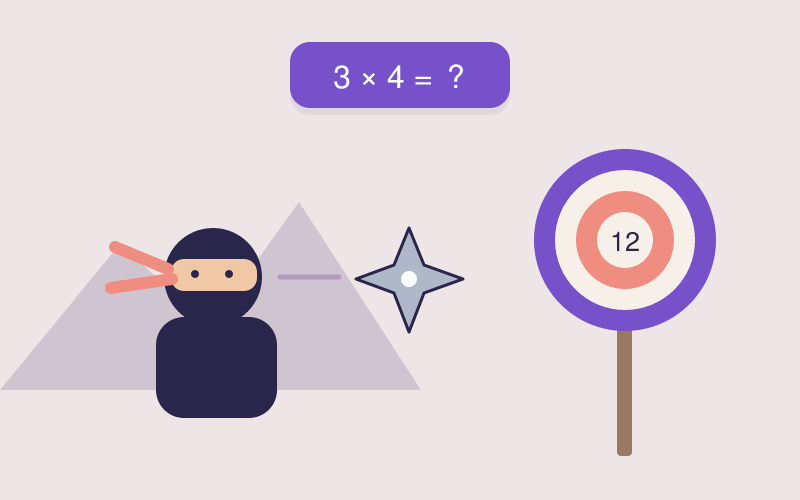
You read an addition fact, pick the target that shows the correct sum, and let the dart fly the instant the trajectory lines up. It trains fact recall and steady timing together, so a right answer becomes a right hit.
Solving the Fact Is Only Half the Throw: Timing Decides the Hit
Plenty of Grade 3 students can name 7 + 6 in a heartbeat, then still watch the dart sail wide. The stall is not the arithmetic — it is holding that sum in mind while scanning several spinning targets and choosing the release moment. Ninja Darts separates those layers on screen: you commit to the sum first, then the moving dart path shows exactly when your aim and the correct bullseye overlap. Because a mistimed throw misses even when the math is right, students feel the difference between knowing an answer and acting on it. That visible gap is what pushes recall from slow-and-careful toward automatic.
By Third Grade, Addition Facts Should Come Without Counting
By this stage students have met addition within 20 and, under the grade-2 fluency standard, are expected to know those sums from memory. Ninja Darts pushes that mastery into fast retrieval — the very reflex grade-3 place-value work leans on when adding within 1000 and handling multi-digit sums. The game introduces no new operation; it firms up the recall that later place-value and multiplication lessons quietly depend on.
Three Precision Skills Practiced While Throwing Darts
- Retrieve addition facts quickly.
- Lock onto the correct answer target.
- Control release timing so a correct sum becomes a correct hit.
Three Moves to Hit the Target: Read, Aim, Throw
- Read the addition fact and solve the sum.
- Find the target showing the correct answer.
- Throw when the dart path lines up, then save missed facts for review.
Five-Minute Teacher Routine: Use the Bullseye as a Missed-Fact Sample
Keep track of the facts students miss most often and review only those after play. Targeted review is more useful than replaying without reflection.
Ninja Darts Questions Teachers Ask About Timing Errors
Q: Does a missed shot mean the student does not know addition?
A: Not always. The issue may be timing or target filtering. Ask for the answer aloud before aiming.
Q: Who should use this game?
A: Students who already know basic addition and need more stability under pace. New learners may need slower fact practice first.