Jumping Chicks: Count the Whole Line Before the Board Springs Forward
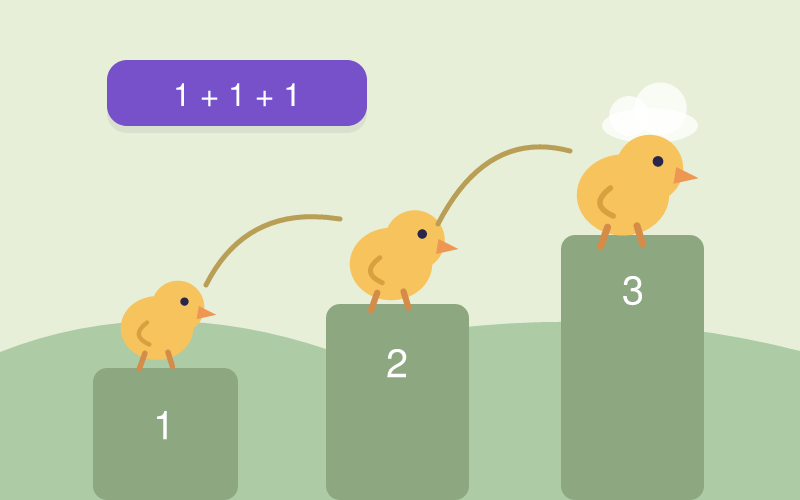
Touch-count each chick, pick the numeral that names how many, and the jump board springs ahead. Every round rehearses the leap from reciting numbers to knowing that the last count tells the total.
Ask "How Many?" and They Count It All Over Again — The Last Number Was Already the Answer
Watch a child count a line of six chicks — "one, two, three, four, five, six" — then ask "how many?" and plenty will jump straight back to "one" and count the whole line over again. They treat counting as a chant to finish, not a question they just answered. That is exactly what cardinality repairs: the last chick counted names the total, so the word "six" already stands for the whole flock and there is nothing left to re-tally. Jumping Chicks asks for the numeral card instead of a second count-through — reach the last chick, hold on to that final word, and tap 6 to launch the board. Tap any other card and the flock stays put, nudging the child to trust the number their own count just handed them.
Pre-K to Grade 1: When the Last Number You Say Becomes the Total
Saying number words in order and knowing what the last one means are separate milestones, and this game aims squarely at the second. It builds on K.CC.B.4, where the final number said tells how many chicks there are, and K.CC.B.5, counting out a named set, then reaches toward K.CC.C.6, judging which line holds more. Once a child trusts that last number without recounting, the make-ten and early addition of Grade 1 arrive far more smoothly.
Three Early Number Skills Practiced While Counting Chicks
- Touch-count each chick in the line: connect one object with one spoken number word.
- Match the number card to the total: understand that the final count names the whole group, not just the last object.
- Compare jump distance: notice more, fewer, and equal quantities before formal addition begins.
Three Moves on the Jump Board: Count, Choose, Jump
- Look at the chick line and count each chick once from left to right or top to bottom.
- Choose the number card that matches the total number of chicks.
- A correct answer sends the chicks farther along the jump board; a miss invites another count.
- For stronger practice, point to each chick while saying the number word aloud.
Five-Minute Teacher Routine: Use the Jump Board as a Counting Check
Before the screen, count three physical sets such as four counters, six blocks, and eight cards. Then move into Jumping Chicks and keep the same rhythm: finger touches one chick, voice says one number. If the rhythm stays accurate on screen, one-to-one correspondence is becoming reliable.
Jumping Chicks Questions Early-Years Teachers Hear About Counting
Q: Why can my child recite numbers but still count the chicks incorrectly?
A: Reciting number words is different from counting objects. Jumping Chicks asks students to pair each chick with exactly one number word and then treat the final number as the total. Pointing while counting aloud is the fastest way to build that connection.
Q: How can this work in a small-group lesson?
A: Start with five to nine counters on the table and have children touch-count them together. Then let one student control Jumping Chicks while the group counts the chick line aloud. The jump board feedback shows right away whether the count was accurate.