Sum Shapes: Balance Every Polygon Edge to Its Target Sum
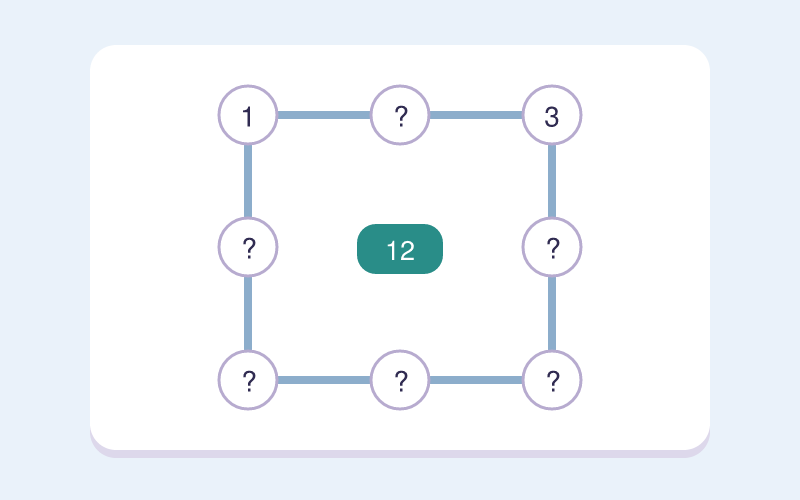
Drop numbers onto the corners of a square or pentagon until every edge reaches its target sum. The shared corners create linked constraints that train students to compare differences and adjust systematically.
A Shared Corner Ties Two Edges Together, So No Side Solves Alone
Most players start by fixing one edge, dropping numbers into its slots until it hits the target, and feel finished — until the neighboring edge falls apart. The sticking point is that a single corner node belongs to two sums simultaneously; nudging it to help one side quietly drags the other along. Because you place values directly on the shared corners, the game lets you watch both running totals shift the instant a corner changes. That visible feedback pushes students from isolated arithmetic toward comparing how far every edge still sits from its target. The reliable move is to adjust the corner touching the widest gap, then re-check the whole shape instead of only the side you just changed.
Why Missing-Addend Fluency Grows Into Reasoning About Linked Equations
Sum Shapes builds on the missing-addend fluency of Grade 4, where students find what a total still needs (4.OA.A.3, 4.NBT.B.4). Here each edge is a small equation, and the shared corners turn several of those equations into one connected system to satisfy at once. That linkage is the bridge into Grade 6 work on writing and reasoning about equations with an unknown (6.EE.B.5), where a single value must make more than one condition true.
Three Skills Practiced in Sum Shapes
- calculating target sums across several edges
- tracking linked constraints at shared nodes
- choosing the adjustment with the widest effect
Teacher and Parent Note
Start with the edge furthest from its target, then identify which of its nodes also belongs to another edge. Require a full-shape check after each move instead of checking only the side that changed.