Neon 2048: Merge Matching Tiles and Double Your Way to 4096
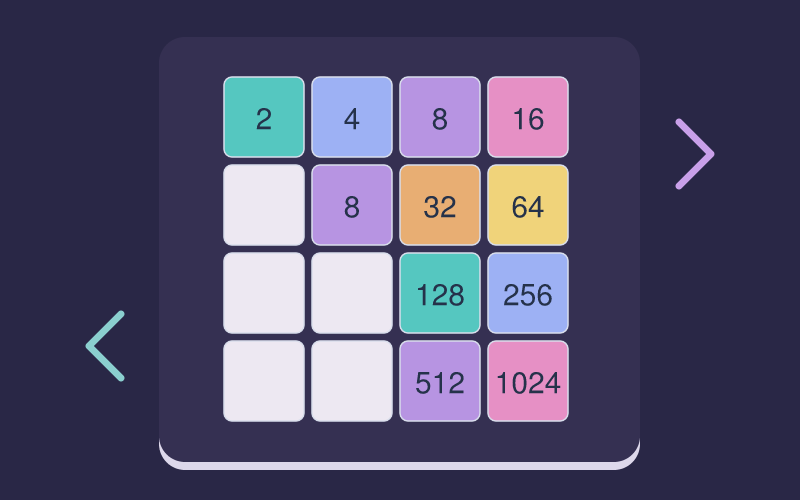
Swipe the whole grid to slide every tile at once, letting equal values collide and combine into the next power of two. Each move trains you to compare growing numbers and reserve space for the merge you want next.
One Careless Swipe Sets Your Corner Tile Loose
Reaching 2048 is not where boards fall apart — the collapse comes right after, when the biggest tile drifts off its corner and splits the grid into two dead halves. The fix is a rule you never break: pick one corner, park your largest tile there, and refuse the single swipe direction that would drag it inward. With the 2048 pinned to a corner, line the rest of that edge into a descending chain — 2048, then 1024, then 512 — so each tile sits beside the only partner it can ever merge with. Every other swipe now feeds small tiles into the far cells without disturbing the anchor, and 4096 becomes a route you build one locked corner at a time instead of a lucky collision you hope for.
Why Corner-Locking Gets Harder as the Numbers Grow
The corner rule is easy to state and hard to hold, which is exactly why it stretches across grades. Grade 4 players practice reading and comparing multi-digit tiles at a glance — is the 512 or the 1024 the one that belongs closer to the corner (4.NBT.A.2)? By Grade 5 the same board asks students to keep a whole descending sequence ordered under pressure, spotting the relationship between neighboring tiles before they commit a swipe (5.OA.B.3). Grade 6 students hold the fullest version: ordering a long chain of values and planning several moves ahead so the anchor never has to move (6.NS.C.7). The skill that grows is not the arithmetic — it is the discipline to keep large numbers in strict order while the grid fights back.
Three Skills Practiced in Neon 2048
- powers of two and repeated doubling
- comparing increasingly large values
- preserving open spaces and merge lanes
Teacher and Parent Note
Have the student write the doubling chain that reaches 128, 256, and 512. Ask why keeping the largest tile near one corner can make later merges easier to organize.